
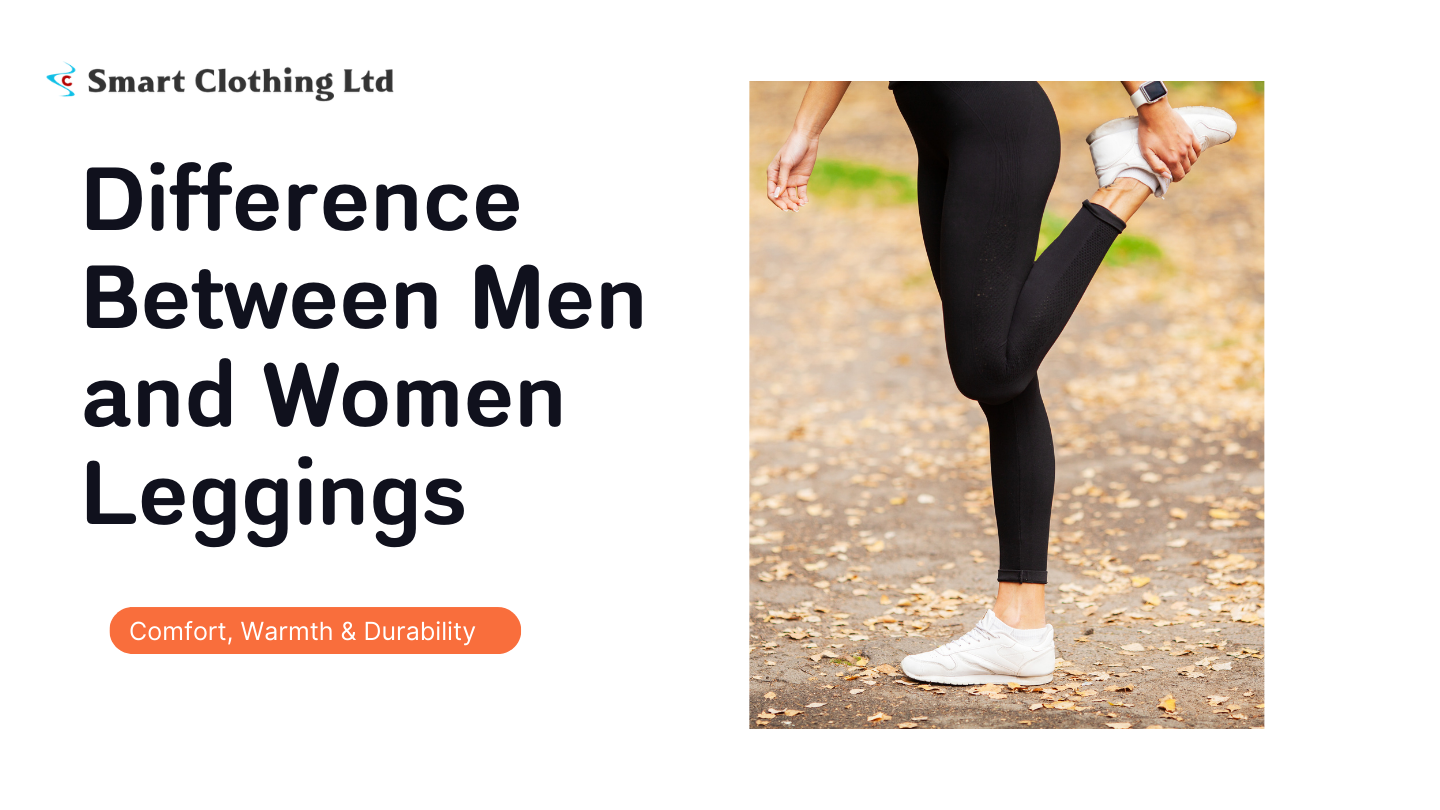
Leggings are no longer just a women’s wardrobe staple. Today, they are popular with men and women alike, whether for workouts, lounging, or everyday casual wear.
As more brands offer options for everyone, many shoppers feel confused when browsing online or in stores. Are men’s and women’s leggings really different? Can you wear either one comfortably?
The truth is, leggings are not always interchangeable. While they may look similar at first glance, there are important differences in fit, design, comfort, and function. These differences are based on body shape, movement needs, and how the leggings are typically used.
In this guide, we’ll break down those differences in a simple, practical way so you can choose the right leggings for your body and lifestyle.
Purpose and Intended Use
Men and women often use leggings for similar reasons, but their intended purpose can influence how they are designed. Many women wear leggings for yoga, gym workouts, running, or even as everyday fashion pieces. They are commonly styled with oversized tops, jackets, or athleisure outfits.
Men’s leggings, sometimes called compression tights or base layers, are often designed more for performance and training. They are commonly worn for gym sessions, running, cycling, or as a layering piece under shorts.
Because of these different uses, brands may design leggings with specific features. For example, performance-focused leggings may offer stronger compression and muscle support, while lifestyle leggings may prioritize stretch, softness, and style.
Understanding how you plan to use your leggings will help you choose the right type for comfort and performance.
Key Differences Between Men’s and Women’s Leggings
While leggings may look similar on a rack or website, men’s and women’s leggings are designed with different body structures, movements, and uses in mind. Understanding these differences will help you pick leggings that feel comfortable, fit well, and perform as expected.
1. Fit and Body Shape
- Women’s leggings: Typically designed to hug curves, with extra space in the hips and a narrower waist. They often accommodate a higher waist-to-hip ratio.
- Men’s leggings: Usually cut straighter through the hips and thighs, with more room in the front for comfort and mobility. Waistbands are often positioned lower than women’s high-rise styles.
- Why it matters: Wearing the wrong type can lead to discomfort, bunching, or restricted movement.
2. Waistband Design
- Women’s leggings: Often feature high-rise or mid-rise waistbands for support and shaping. Elastic is designed for snug comfort without digging in.
- Men’s leggings: Usually have mid-rise or adjustable waistbands to support core movement, especially during athletic activity.
3. Fabric and Stretch
- Women’s leggings: Fabrics are often softer, with more four-way stretch, suitable for yoga, casual wear, or running.
- Men’s leggings: Fabrics may be thicker, more compression-oriented, and designed to support muscles during high-intensity workouts.
- Key difference: Women’s leggings often prioritize comfort and flexibility, while men’s leggings prioritize support and performance.
4. Length and Cut
- Women’s leggings: Available in a wide variety of lengths – full, 7/8, cropped, or capri. They often taper tightly at the ankle for a slim, stylish silhouette.
- Men’s leggings: Usually full-length or slightly looser at the ankles to allow freedom of movement. Seams may be positioned differently to reduce chafing during sports.
5. Front Support and Contouring
- Women’s leggings: Designed for a smooth, contoured look, often with minimal front paneling.
- Men’s leggings: Include extra front space or gussets to provide comfort and support, especially for athletic activity.
6. Design and Style Options
- Women’s leggings: Wider variety of colors, patterns, and decorative details like mesh inserts, prints, or reflective stripes.
- Men’s leggings: Tend to be solid, muted colors, with simpler designs focused on function over fashion.
7. Functional Features
- Pockets: More common in men’s leggings for phones or keys during workouts.
- Seams: Men’s leggings often have reinforced seams for durability; women’s seams may focus on aesthetics and smoothness.
Read our guide: What Is the Best Fabric for a Sports Jersey?
Can Men Wear Women’s Leggings and Vice Versa?
In some cases, men can wear women’s leggings and women can wear men’s leggings, but it depends on the fit, fabric, and intended use.
When it might work:
- If the leggings are stretchy and flexible, such as for casual wear or yoga.
- When sizing is close to your body measurements, especially waist and hip circumference.
- For short-term use, like trying new styles or layering under shorts or skirts.
Common issues:
- Women’s leggings may feel tight around the waist or hips for men.
- Men’s leggings may be looser in the hips or thighs, causing bunching for women.
Sizing considerations: Always check the brand’s size chart and consider high-stretch fabrics.
Gender-neutral leggings: Some brands design leggings to fit any body type comfortably, making them a practical choice for unisex use, sports, or casual wear.
Men’s and women’s leggings may look similar, but fit, design, waistband, fabric, and functionality differ to suit different body types and purposes. Choosing the right leggings is about comfort, mobility, and how you plan to wear them, rather than labels.
For global brands seeking quality leggings, Smart Clothing Ltd in Bangladesh is a trusted manufacturer, producing garments for men and women with consistent sizing, premium fabrics, and reliable exports to Europe, including Germany and Italy. By understanding these differences and choosing thoughtfully, shoppers can enjoy leggings that fit well, feel great, and perform as needed.
Role of Garments Buying House in Apparel Export Business
FAQ
What is the main difference between men’s and women’s leggings?
Men’s leggings are typically cut straighter with more front space and higher compression, while women’s leggings are designed to hug curves and provide comfort at the hips and waist.
Are men’s leggings more comfortable for workouts?
For men, yes, especially for running or gym sessions, as they offer muscle support and stretch. Women might find men’s leggings loose in some areas.
Can women wear men’s leggings for gym training?
They can, but fit may not be perfect. Look for gender-neutral or high-stretch designs for comfort.
Are leggings unisex or gender-specific?
Some leggings are unisex, while others are specifically designed to fit male or female body shapes.
How do I know which leggings will fit me best?
Always check size charts, fabric stretch, and reviews. Consider waist, hips, thigh measurements, and intended use.
