
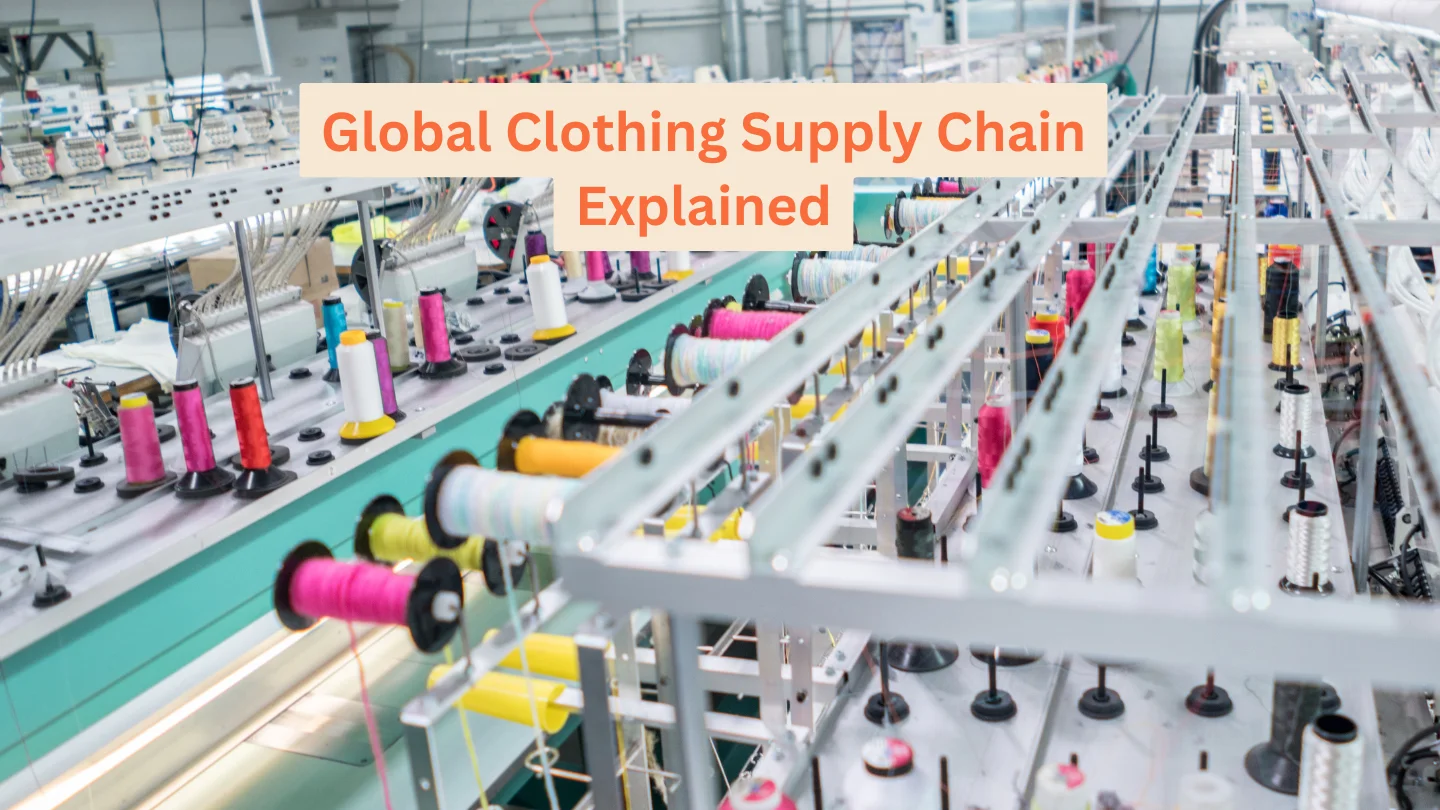
Behind every t-shirt, hoodie, or pair of sweatpants lies a complex network spanning continents, involving dozens of companies, and requiring coordination across multiple stages of production. The global clothing supply chain transforms raw materials into finished garments that reach consumers worldwide. Understanding this intricate system is essential for brands, retailers, and anyone interested in how fashion actually works.
This comprehensive guide walks through each stage of the apparel supply chain, explains the key players involved, examines current challenges, and explores how transparency and sustainability are reshaping the industry in 2026.
What Is a Clothing Supply Chain?
A clothing supply chain encompasses all steps required to produce and deliver garments from raw material to end consumer. Unlike simple supply chains where one company controls most processes, apparel supply chains are fragmented across multiple countries and specialized companies.
The World Trade Organization estimates that global textile and clothing trade exceeds $900 billion annually, making it one of the world’s largest manufacturing sectors. This massive industry relies on supply chains that can span 6-12 months from initial design to retail delivery.
Why Apparel Supply Chains Are So Complex
Several factors create complexity:
Geographic Dispersion: Raw materials often originate in one country (cotton from India, synthetics from China), fabrics are produced in another (dyeing and weaving in Bangladesh or Vietnam), garments are manufactured in a third location, and final products ship to dozens of consumer markets.
Specialization: Different companies specialize in specific stages – fiber production, spinning, weaving, dyeing, cutting, sewing, finishing, quality control, logistics, and distribution. A single garment may pass through 15-20 separate companies.
Seasonal Demands: Fashion’s seasonal nature creates peaks and valleys in demand, requiring flexible capacity and careful inventory management throughout the chain.
Quality Standards: Each stage must meet specific quality standards, with testing and inspection at multiple points to prevent defects from reaching consumers.
For manufacturers like Smart Clothing Ltd, managing these complexities while maintaining quality, compliance, and on-time delivery requires sophisticated planning systems and strong relationships throughout the supply network.
Stages of the Apparel Supply Chain
The clothing supply chain consists of distinct stages, each adding value and bringing the product closer to the consumer.
Stage 1: Raw Material Production
Everything starts with fibers—either natural (cotton, wool, linen) or synthetic (polyester, nylon, spandex).
Natural Fibers
Cotton dominates natural fiber usage, accounting for roughly 25% of global fiber production according to the Textile Exchange. Cotton farming occurs primarily in India, China, the United States, Pakistan, and Brazil. The process involves:
- Planting and cultivating cotton crops (3-5 months growing period)
- Harvesting cotton bolls (manually or mechanically)
- Ginning to separate cotton fibers from seeds
- Grading and baling for shipment to spinning mills
Organic cotton, used increasingly in sustainable fashion, requires certification verifying chemical-free farming practices. Our organic cotton products source from certified suppliers who provide complete traceability from farm to fabric.
Synthetic Fibers
Polyester, nylon, and other synthetics are produced from petroleum-based chemicals through complex industrial processes. Synthetic fiber production concentrates in China, which produces over 70% of global polyester.
Benefits of synthetics include:
- Lower cost than most natural fibers
- Consistent quality and performance properties
- Moisture-wicking and quick-drying capabilities
- Durability and wrinkle resistance
Environmental concerns about synthetics include petroleum dependency and microplastic pollution, driving innovation in recycled polyester made from plastic bottles or old garments.
Stage 2: Yarn Production (Spinning)
Raw fibers must be spun into yarn before fabric production can occur.
Spinning Process
Spinning mills receive baled cotton or synthetic fibers and transform them through:
- Cleaning and carding to align fibers
- Drawing to blend and strengthen fiber strands
- Roving to further thin and strengthen
- Spinning to create final yarn
- Winding onto cones or spools for shipment
Yarn characteristics (thickness, strength, twist level) determine final fabric properties. Ring-spun cotton, for example, produces softer, stronger fabric than open-end spinning—which is why quality t-shirt manufacturers specify ring-spun yarns.
Stage 3: Fabric Production and Dyeing
Yarn becomes fabric through weaving or knitting, followed by dyeing and finishing.
Knitting vs. Weaving
Most casual apparel uses knit fabrics:
- Jersey knits for t-shirts and activewear
- Fleece for hoodies and sweatshirts
- Rib knits for polo collars and cuffs
- Interlock for premium fitted garments
Knitting creates fabric directly from yarn using needles. The fabric stretches, making it comfortable and suitable for fitted garments.
Woven fabrics (for shirts, pants, and outerwear) are created by interlacing warp and weft yarns at right angles using looms. Woven fabrics typically have less stretch than knits but offer different aesthetic and performance properties.
Dyeing and Finishing
After fabric construction, most textiles undergo dyeing and finishing:
Dyeing Methods:
- Yarn dyeing before fabric production (for stripes and plaids)
- Piece dyeing after fabric production (most common)
- Garment dyeing after sewing (for special color effects)
Finishing Processes:
- Heat-setting to stabilize fabric dimensions
- Brushing for soft hand feel (fleece)
- Calendering for smooth surface
- Chemical treatments (softeners, water repellents, anti-microbial)
- Sanforization to prevent shrinkage
Environmental impact concentrates at this stage. Dyeing and finishing consume massive water quantities and use chemicals that require proper treatment before discharge. Our manufacturing facility operates advanced wastewater treatment systems ensuring all effluent meets international environmental standards.
Stage 4: Manufacturing and Assembly
Cut and sew factories transform fabric into finished garments.
Pattern Making and Grading
Before production begins, designers create patterns—templates for each garment piece. Patterns are graded to multiple sizes, ensuring fit consistency across size runs. Modern factories use CAD (Computer-Aided Design) software for precise pattern development and grading.
Cutting
Cutting requires precision to minimize waste while ensuring all pieces are accurate:
- Fabric spreading onto cutting tables in multiple layers
- Marker making to arrange pattern pieces efficiently
- Cutting using straight knives, band saws, or automated cutters
- Bundling cut pieces for sewing
Efficient cutting improves profitability—fabric typically represents 40-60% of garment cost, so minimizing waste directly impacts margins.
Sewing and Assembly
Cut pieces move to sewing lines where specialized operators assemble garments. Modern apparel manufacturing uses progressive bundle systems or modular production:
Progressive Bundle System:
- Each operator performs specific operations
- Bundles move from operator to operator
- Efficient for large production runs
Modular Production:
- Teams work together on complete garments
- More flexible for varied styles and quantities
- Better for quality control
Assembly sequence for a basic t-shirt might include:
- Sew shoulder seams
- Attach neck rib
- Set sleeves
- Sew side seams (body and sleeves together)
- Hem bottom and sleeves
- Apply labels and tags
- Final inspection
Hoodie manufacturing involves additional complexity with zippers, drawcords, pockets, and lining—requiring more specialized equipment and operators.
Quality Control
Inspection occurs at multiple points:
- Fabric inspection upon receipt
- Cutting accuracy checks
- Inline inspection during sewing (typically every 100 pieces)
- Final inspection before packaging
- AQL (Acceptable Quality Limit) sampling for large orders
Quality control prevents defects from reaching consumers and protects brand reputation.
Finishing and Packaging
After sewing, garments undergo finishing:
- Trimming loose threads
- Washing or steaming to remove wrinkles
- Special treatments (stone washing, garment dyeing, etc.)
- Pressing and folding
- Applying size stickers and price tags
- Poly-bagging or hanging as specified
- Carton packing with documentation
Stage 5: Distribution and Retail
Finished garments ship from factories to brands, retailers, and ultimately consumers.
International Logistics
Most garment manufacturing occurs in Asia (particularly China, Bangladesh, Vietnam, India) while major consumer markets are in North America and Europe. This geographic separation requires complex logistics:
Ocean Freight:
- Most cost-effective for large volumes
- Transit times: 20-30 days from Asia to Europe/North America
- Requires advance planning due to long lead times
Air Freight:
- Used for urgent orders or high-value items
- Transit times: 3-7 days
- Costs 5-10x more than ocean freight
- Carbon footprint significantly higher
Documentation: Exporting requires comprehensive paperwork:
- Commercial invoices
- Packing lists
- Bills of lading
- Certificates of origin
- Customs declarations
- Import permits (if required)
Our export team handles complete documentation, ensuring smooth customs clearance and on-time delivery to buyers worldwide.
Warehousing and Distribution
Upon arrival in destination countries, garments typically flow through:
- Import customs clearance
- Distribution centers for sorting and allocation
- Retail stores or fulfillment centers (for e-commerce)
- Final delivery to consumers
Retail Models
Distribution varies by business model:
Traditional Retail:
- Products shipped to physical stores
- Consumers purchase and take home immediately
- Seasonal inventory planning critical
E-commerce:
- Products held in fulfillment centers
- Individual orders picked, packed, and shipped directly to consumers
- Faster inventory turnover, but higher logistics costs per unit
Omnichannel:
- Integrated online and offline retail
- Buy online, pick up in store
- Store inventory visible online
- More complex inventory management
Key Players in the Supply Chain
Understanding who does what clarifies how the system functions.
Fiber Producers
Companies like Lenzing (for cellulosic fibers) and major petrochemical firms produce raw fibers. Fiber producers rarely interact directly with garment brands, selling instead to yarn spinners and fabric mills.
Textile Mills
Mills spin yarn, knit or weave fabric, and perform dyeing and finishing. Large vertically integrated mills handle multiple stages. Textile production concentrates in countries with established infrastructure – China, India, Bangladesh, Turkey, Vietnam.
Garment Manufacturers
Factories like Smart Clothing Ltd cut and sew finished garments. Some factories specialize in specific categories:
- Knitwear specialists for t-shirts, polos, and sweatshirts
- Woven garment factories for shirts and pants
- Outerwear specialists for jackets and coats
- Technical activewear manufacturers
Buying Houses and Sourcing Agents
Buying houses act as intermediaries between brands and factories, providing:
- Factory identification and vetting
- Sample development coordination
- Quality control and inspection services
- Logistics management
- Compliance monitoring
Brands and Retailers
Fashion brands design products, manage marketing, and own customer relationships. Some brands (like Zara or H&M) manufacture some products internally, but most outsource production to specialized manufacturers.
Logistics Providers
Freight forwarders, shipping lines, trucking companies, and customs brokers move products through the supply chain, handling complex documentation and regulatory requirements.
Supply Chain Challenges in 2026
Despite technological advances, the clothing supply chain faces ongoing challenges.
Long Lead Times
Traditional supply chains require 6-12 months from design to retail delivery:
- Design and development: 2-3 months
- Fabric sourcing and production: 2-3 months
- Garment manufacturing: 1-2 months
- Shipping and distribution: 1-2 months
These timelines make forecasting difficult. Brands must predict trends and demand half a year before products reach stores, increasing risk of overstock or stockouts.
Inventory Management
Balancing inventory is challenging:
- Too much inventory ties up capital and leads to markdowns
- Too little inventory means lost sales and disappointed customers
- Seasonal fashion amplifies the problem with short selling windows
Transparency and Traceability
Most brands struggle to identify suppliers beyond their first-tier (the factory sewing their garments). Fabric mills, yarn spinners, and raw material sources remain opaque. This lack of visibility creates risks:
- Difficulty ensuring compliance throughout the chain
- Limited ability to verify sustainability claims
- Challenges responding quickly to supply disruptions
Sustainability Pressures
The fashion industry faces criticism for environmental impact:
- Carbon emissions from manufacturing and transportation
- Water consumption and pollution from dyeing
- Textile waste (both production waste and post-consumer disposal)
- Microplastic pollution from synthetic garments
Consumers and regulators demand transparency and improvement. Brands must adapt supply chains to measure and reduce environmental footprint.
Geopolitical Risks
Supply chains face disruptions from:
- Trade policy changes and tariff fluctuations
- Political instability in sourcing countries
- Natural disasters affecting production regions
- Pandemic-related shutdowns and shipping delays
Recent supply chain disruptions (COVID-19, Suez Canal blockage, etc.) highlighted the fragility of long, complex global networks.
How Sustainable Supply Chains Are Changing Fashion
Sustainability is reshaping how apparel supply chains operate, with changes at every stage.
Sustainable Materials
Material innovation focuses on:
Recycled Fibers:
- Recycled polyester from plastic bottles or old garments
- Recycled cotton from textile waste
- Lower environmental impact than virgin materials
Regenerative Agriculture:
- Farming practices that restore soil health
- Carbon sequestration through improved cotton farming
- Benefits for farmer livelihoods
Alternative Fibers:
- Hemp and linen requiring less water than cotton
- Innovative materials from wood pulp (Tencel, Modal)
- Experimental bio-fabricated materials
Circular Economy Models
Linear “take-make-dispose” models are giving way to circular approaches:
Design for Longevity:
- Durable construction extending garment life
- Timeless designs rather than fast-fashion trends
- Repair services to keep products in use
Take-Back Programs:
- Brands accept old garments for recycling
- Material recovery for new products
- Incentives for consumers to participate
Rental and Resale:
- Clothing rental services (Rent the Runway, etc.)
- Brand-operated resale platforms
- Peer-to-peer secondhand marketplaces
Local and Regional Production
“Nearshoring” brings manufacturing closer to consumer markets:
Benefits:
- Shorter lead times enabling faster response to trends
- Lower shipping carbon footprint
- Easier quality control and compliance monitoring
- Support for local economies
Challenges:
- Higher labor costs than offshore manufacturing
- May lack specialized expertise or capacity
- Initial setup requires infrastructure investment
Some brands split production—trend-sensitive items produced locally for speed, basics manufactured offshore for cost efficiency.
Digital Transformation
Technology enables more sustainable and efficient supply chains:
Digital Product Development:
- 3D design tools reduce physical sampling
- Virtual fittings minimize sample iterations
- Fewer samples means less waste and faster development
Supply Chain Visibility:
- Blockchain and RFID tracking provide complete traceability
- Real-time visibility into inventory and production status
- Easier verification of sustainability claims
Demand Forecasting:
- AI analyzes sales data, trends, and external factors
- More accurate predictions reduce overproduction
- Dynamic replenishment based on actual demand
On-Demand Manufacturing: Digital printing and automated cutting enable:
- Production after order receipt rather than advance speculation
- Elimination of excess inventory
- Mass customization (products made to customer specifications)
At Smart Clothing Ltd, we’re investing in digital systems that provide buyers with real-time production visibility and reduce waste through precise demand matching.
Supply Chain Transparency: The New Expectation
Modern consumers want to know where and how their clothes are made. Brands respond with increased transparency.
Public Supply Chain Disclosure
Leading brands now publish supplier lists, allowing:
- Consumer verification of manufacturing locations
- NGO and media scrutiny of working conditions
- Competitive pressure driving industry-wide improvements
The Fashion Transparency Index tracks how major brands disclose supply chain information, with top performers publishing complete supplier lists including contact details and worker counts.
Certifications and Standards
Third-party verification provides credibility:
B Corp Certification: Measures social and environmental performance across entire business operations.
Fair Trade: Ensures fair wages and working conditions, with premiums supporting community development.
GOTS (Global Organic Textile Standard): Certifies organic fiber content and processing with environmental and social criteria.
Bluesign: Ensures safe chemical use throughout textile production.
Our certifications including WRAP, OEKO-TEX, and BSCI provide buyers confidence in our compliance and quality standards.
Impact Measurement and Reporting
Brands increasingly measure and report supply chain impacts:
- Carbon footprint calculations for products
- Water consumption tracking
- Chemical usage monitoring
- Social impact assessments
This data allows informed decision-making and drives continuous improvement.
The Future of Clothing Supply Chains
Several trends will shape supply chains in coming years:
Regionalization: Shorter, more flexible supply chains closer to consumer markets will complement (not completely replace) offshore manufacturing.
Automation: Sewing automation technology, while still developing, will eventually change manufacturing economics and locations.
Personalization: Mass customization technology enables products tailored to individual customer preferences without traditional inventory.
Circular Integration: Supply chains will incorporate reverse logistics, bringing used garments back for repair, refurbishment, or material recovery.
Radical Transparency: Complete supply chain visibility from fiber to finished product will become the norm, enabled by digital tracking technologies.
Conclusion
The global clothing supply chain is a complex, interconnected system that has evolved to deliver affordable fashion worldwide. Understanding this system—from cotton fields to retail stores—reveals both remarkable efficiency and significant challenges.
As consumers demand more sustainable and ethical fashion, supply chains must transform. Transparency, circular models, local production, and digital innovation are reshaping how clothes move from concept to closet.
For brands, choosing manufacturing partners that understand and actively improve supply chain practices is essential. Whether you need polo shirts, baby wear, or sweatpants, working with suppliers committed to responsible supply chain management ensures your products meet evolving consumer and regulatory expectations.
The clothing supply chain of tomorrow will be more transparent, sustainable, and responsive—transforming fashion from a linear extractive industry into a circular system that benefits people and planet alike.
Related Articles:
- Garment Factory Compliance: The Complete 2026 Checklist
- Role of Garments Buying House
- Best Garments Supplier in Bangladesh
- Clothing Made in Bangladesh
Looking for a transparent, responsible supply chain partner? Contact Smart Clothing Ltd to discuss how our integrated approach delivers quality, compliance, and reliability.
