
The traditional apparel supply model design six months ahead, produced in Asia, shipped globally, hope it sells, is breaking down. Long lead times, overproduction waste, and mounting environmental concerns have exposed fundamental flaws in how the fashion industry operates. A new paradigm is emerging, driven by technology, sustainability imperatives, and changing consumer expectations.
On-demand production, local manufacturing, AI-driven forecasting, and circular business models are transforming clothing supply from speculative mass production to responsive, sustainable systems. This shift represents the most significant change in apparel manufacturing since globalization moved production offshore decades ago.
This comprehensive guide explores how on-demand clothing supply works, why brands are embracing local production, and how these innovations are creating a more sustainable fashion future.
What Is On-Demand Clothing Supply?
On-demand clothing supply means producing garments only after orders are received, rather than manufacturing large speculative quantities hoping they sell. This fundamental shift eliminates the core problem of traditional fashion: overproduction.
The Traditional Model’s Fatal Flaw
Conventional apparel supply operates on forecasting:
- Designers create collections 6-12 months before retail delivery
- Brands estimate demand based on historical data and trend predictions
- Manufacturers produce full quantities in advance
- Inventory sits in warehouses waiting for consumer purchases
- Unsold products are marked down or destroyed
This approach produces massive waste. According to McKinsey research, the industry overproduces by approximately 30%, with billions of garments ending up in landfills annually. The Ellen MacArthur Foundation estimates a garbage truck of textiles is wasted every second globally.
How On-Demand Production Works
On-demand models flip this sequence:
- Customers browse available designs (digital samples, not physical inventory)
- Orders are placed and payment received
- Production begins based on confirmed demand
- Garments ship directly to customers or retailers
- Zero unsold inventory remains
Technology enables this approach through:
Digital Design Tools: 3D rendering creates photorealistic product images without physical samples. Customers see exactly what they’re buying before production starts.
Automated Manufacturing: Digital printing, automated cutting, and increasingly, automated sewing reduce setup times and enable economical short runs.
Integrated Software: Order management systems connect e-commerce platforms directly to production facilities, triggering manufacturing automatically.
Agile Production: Flexible manufacturing cells can switch between styles quickly, accommodating varied orders without efficiency loss.
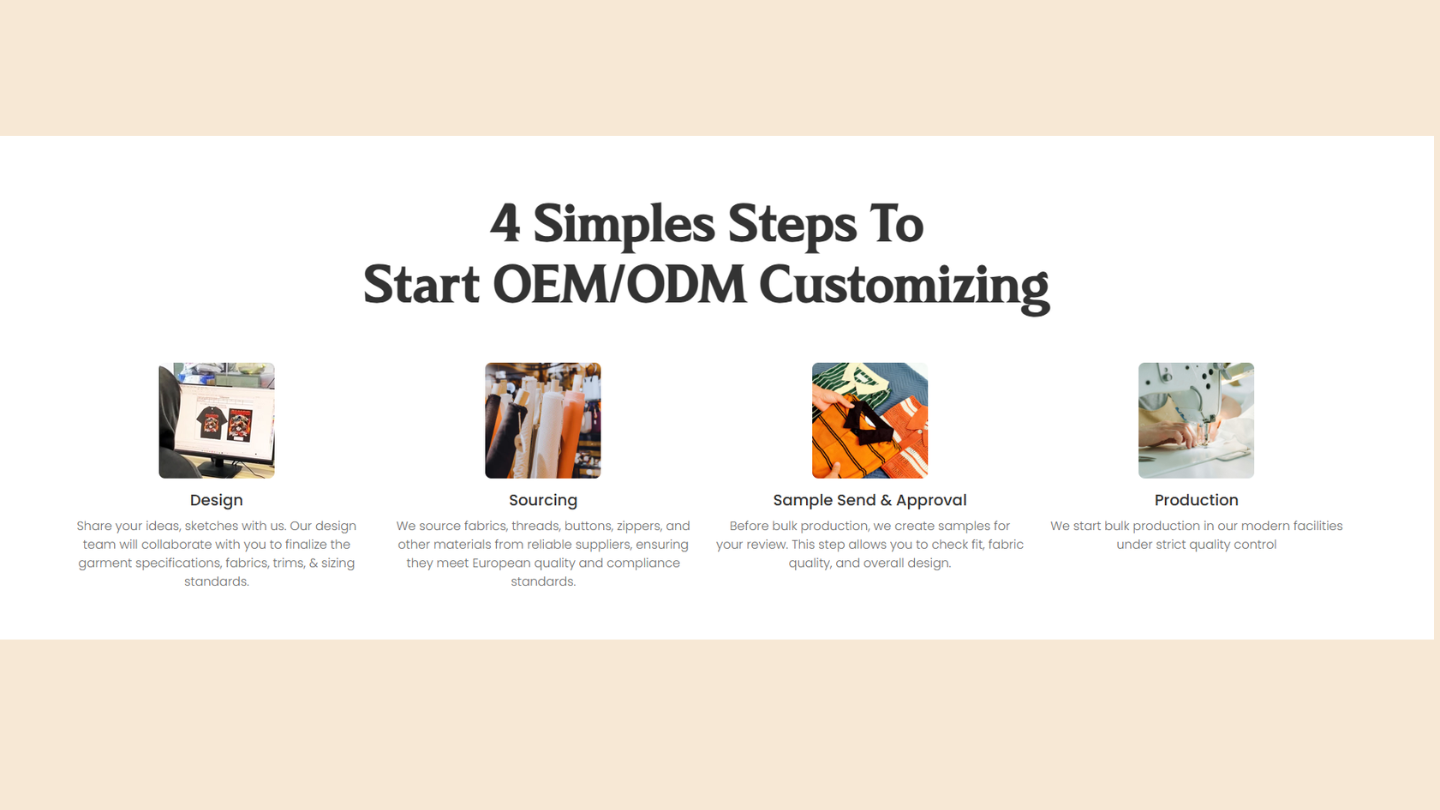
Smart Clothing Ltd is pioneering on-demand capabilities for select buyers, using digital sampling and flexible production systems that enable orders as small as 100 pieces per style.
Hybrid On-Demand Models
Pure made-to-order production works for some products but not all. Hybrid models balance responsiveness with efficiency:
Core-Plus-Trend:
- Produce basics (white t-shirts, black hoodies) in advance based on reliable demand
- Manufacture trend items and colors on-demand based on actual orders
- Combine the cost efficiency of volume production with trend responsiveness
Pre-Order Collections:
- Launch collections digitally with lead time transparency
- Accept pre-orders over 2-4 weeks
- Produce exact quantities ordered plus small overages for quality contingencies
- Deliver within promised timeframes
Made-to-Stock with Fast Replenishment:
- Maintain minimal retail inventory (one size run per style)
- Monitor sales daily through integrated systems
- Replenish bestsellers quickly (2-3 week reorders instead of 3-4 months)
- Avoid overproduction on slow sellers
Consumer Benefits of On-Demand
On-demand supply improves customer experience:
Product Customization: Since production happens after ordering, personalization becomes feasible:
- Custom sizing beyond standard size runs
- Color and fabric combinations chosen by customers
- Monogramming and custom graphics
- Specific length or fit adjustments
Reduced Returns: Made-to-specification products fit better and match expectations more closely, reducing the return rates that plague e-commerce fashion.
Sustainable Choice: Environmentally conscious consumers can confidently purchase knowing their product was made specifically for them, not overproduced and potentially wasted.
Exclusive Products: Limited edition designs become economically viable since brands don’t risk large unsold inventory.
Benefits for Brands and Manufacturers
On-demand and responsive supply models deliver compelling business advantages.
Financial Benefits
Reduced Inventory Costs: Traditional fashion requires massive working capital tied up in inventory:
- Fabric and trim procurement costs paid months before sales
- Finished goods sitting in warehouses
- Markdowns to clear seasonal products
On-demand dramatically reduces this capital requirement, improving cash flow and financial flexibility.
Lower Waste Costs: Unsold inventory isn’t just lost revenue; it incurs disposal costs. Companies face growing regulations requiring textile recycling rather than landfilling, adding expense to overproduction.
Better Margins: Producing what’s ordered eliminates markdowns. Brands can maintain full-price selling, improving profitability. Research shows on-demand models can improve gross margins by 10-15 percentage points.
Market Testing: Launch designs with minimal risk. If a style doesn’t sell, simply don’t produce more—no large unsold inventory to liquidate.
Operational Advantages
Faster Market Response: Traditional 6-month lead times mean trends shift before products arrive. On-demand enables:
- Design to delivery in 4-6 weeks
- Ability to capitalize on emerging trends
- Test and iterate based on real market feedback
- Adjust sizing and specifications based on actual customer data
Simplified Planning: Forecasting becomes less critical when production follows demand. While some planning remains necessary for capacity and materials, the risk of catastrophic forecast errors decreases.
Reduced SKU Complexity: Physical inventory requirements drive SKU rationalization (limiting colors and styles to manage warehouse space). On-demand digital catalogs can offer unlimited variety since nothing exists until ordered.
Sustainability Impact
Environmental benefits drive many brands toward on-demand:
Eliminated Overproduction: The industry’s single largest waste source, making clothes nobody buys, disappears entirely.
Reduced Chemical Waste: Dyeing and finishing only needed quantities avoids treating excess fabric that ends up unused.
Lower Carbon Footprint: Less inventory means less warehousing, which reduces climate-controlled storage energy consumption. Shipping finished products is also more efficient than shipping inventory that may never sell.
Design for Longevity: Without pressure to create constant newness driving replacement purchases, brands can focus on timeless, durable designs that customers keep longer.
The Role of Local and Sustainable Sourcing
On-demand production pairs naturally with local and regional manufacturing, creating synergies that enhance both approaches.
Why Local Production Is Growing
“Nearshoring” and “reshoring” bring manufacturing closer to consumer markets:
Speed to Market:
- Eliminate 20-30 day ocean transit times
- Truck or short-haul air delivery in 2-5 days
- Enables true fast fashion—responding to trends in real-time
Manufacturing in Bangladesh serves European markets efficiently with air freight delivering products in under a week when speed is essential, while maintaining cost advantages through efficient production.

Quality Control: Proximity enables:
- More frequent factory visits
- Faster sample iterations
- Easier communication across minimal time zones
- Immediate issue resolution
Flexibility: Regional manufacturing allows smaller production runs economically. Setup costs (patterns, samples, approvals) spread over shorter distances and times, making smaller quantities viable.
Supply Chain Transparency: Shorter supply chains are easier to monitor and verify. Brands can confidently make sustainability and ethical manufacturing claims when their supply chain spans one or two countries rather than six.
Risk Mitigation: Diverse geographic production protects against:
- Regional disruptions (natural disasters, political instability)
- Shipping bottlenecks
- Changing trade policies
- Currency fluctuations
Hybrid Global-Local Models
Rather than wholesale moves, smart brands employ hybrid strategies:
Basics Offshore, Trends Local:
- Produce high-volume core products in cost-efficient offshore locations like Bangladesh
- Manufacture trend-sensitive items locally for speed
- Optimize for both cost and responsiveness
Seasonal Geographic Shifts:
- Produce spring/summer collections locally for faster delivery
- Use offshore manufacturing for fall/winter with longer lead times
- Align production locations with seasonal demand patterns
Product Category Specialization:
- Complex knitwear and sweaters in specialized offshore facilities with expertise
- Simple cut-and-sew locally for flexibility
- Match product requirements to manufacturing strengths
Sustainable Materials and Local Sourcing
Local production enables sustainable material innovation:
Regional Fiber Production:
- Cotton grown and processed regionally
- Hemp and linen from local agriculture
- Reduces fiber transportation emissions
Recycled Materials:
- Collect used garments from consumer markets
- Process into fibers in nearby facilities
- Manufacture new garments from recycled content
- Creates circular local systems
Waste Stream Integration:
- Capture production waste for recycling
- Transform cutting scraps into new yarns
- Use defective garments for fiber recovery
- Minimize landfill disposal
Natural Dyeing:
- Local plant-based dyes reduce chemical use
- Traditional natural dyeing techniques revival
- Lower water consumption than synthetic dyes
How AI and Data Are Transforming Apparel Supply
Artificial intelligence and data analytics make on-demand and responsive supply chains possible at scale.
Demand Forecasting
AI-powered forecasting dramatically improves accuracy:
Multi-Source Data Analysis:
- Historical sales patterns
- Current inventory levels
- Website browsing and search behavior
- Social media trend signals
- Weather forecasts
- Economic indicators
- Competitor activity
Machine learning identifies patterns humans miss, improving forecast accuracy from 60-70% (typical manual forecasting) to 85-90% with AI systems.
Real-Time Adjustments: Traditional forecasts are static, set months in advance. AI continuously updates predictions based on emerging data, enabling dynamic production planning.
Granular Predictions: Instead of aggregate demand estimates, AI predicts:
- Specific SKU demand by size and color
- Geographic demand variations
- Channel-specific requirements (wholesale vs. direct-to-consumer)
- Temporal patterns (day-of-week or seasonal fluctuations)
Dynamic Pricing and Inventory Management
AI optimizes pricing and inventory decisions:
Markdown Optimization: Algorithms determine ideal timing and depth for markdowns, maximizing revenue from products that must be cleared while minimizing unnecessary discounting.
Inventory Allocation: For retailers with multiple stores or channels, AI allocates inventory to locations where demand is highest, improving sell-through.
Automated Replenishment: AI triggers reorders based on predicted demand, maintaining optimal stock levels without human intervention. For manufacturers, this creates consistent production flow rather than peaks and valleys.
Trend Prediction
AI analyzes signals predicting fashion trends:
Social Media Analysis:
- Instagram, TikTok, Pinterest image analysis
- Hashtag tracking and viral content identification
- Influencer activity monitoring
- Identify emerging styles before mainstream adoption
Retail Data:
- Point-of-sale data across retailers
- E-commerce browsing and search trends
- Cart abandonment patterns revealing unmet demand
- Review and ratings sentiment analysis
Cultural Signals:
- Entertainment industry (movies, TV, music)
- Celebrity and influencer wardrobes
- Street style photography
- Event-driven fashion moments
Early trend detection enables brands to position designs ahead of mass-market demand, capturing profit while trends are fresh.
Supply Chain Optimization
AI improves operational efficiency:
Production Planning:
- Optimize cutting to minimize fabric waste
- Schedule production to balance capacity utilization
- Route orders to best-suited facilities in multi-location networks
- Predict and prevent quality issues based on pattern recognition
Logistics Optimization:
- Route optimization for delivery efficiency
- Carrier selection based on cost, speed, reliability
- Warehouse location analysis
- Dynamic delivery date estimates
Supplier Performance:
- Track on-time delivery rates, quality metrics
- Predict supplier issues before they impact production
- Identify best-performing partners for specific products
Personalization at Scale
AI enables mass customization:
Fit Recommendations:
- Analyze customer measurements and purchase history
- Recommend sizes with high confidence
- Reduce returns from fit issues
- Suggest alterations for perfect fit
Style Recommendations:
- Learn individual customer preferences
- Suggest products matching personal taste
- Create personalized catalog views
- Increase conversion through relevant recommendations
Design Customization:
- Generate design variations based on customer preferences
- Allow customers to modify colors, patterns, details
- Ensure design constraints are maintained (technical feasibility)
- Price customizations appropriately
Case Studies: Brands Leading the Transformation
Several companies exemplify these emerging supply models.
Fast Fashion Reinvented
Zara’s Hybrid Model: Zara maintains a hybrid approach:
- 50% of production in proximity (Spain, Portugal, Turkey)
- 50% in Asia for basics and less time-sensitive items
- Design to store delivery in 2-3 weeks for local production
- Constant flow of newness keeping customers engaged
- Minimal overproduction through frequent small production runs
Digital-Native On-Demand
Online-Only Brands: Several brands built entirely on on-demand models:
- No physical inventory until orders received
- Digital product visualization replaces samples
- Direct-to-consumer shipping
- Customization options as standard
- Profitable on much lower volumes than traditional brands
Technology-Enabled Customization
Mass Customization Leaders: Technology enables personalized products at scale:
- AI-powered fit recommendations reducing returns
- Customer-specified colors, patterns, details
- Made-to-measure production from digital measurements
- Premium pricing for personalized products
Circular Fashion Pioneers
Rental and Resale: Some brands now design with multiple lifecycles in mind:
- Rental services offering temporary access
- Take-back programs accepting used garments
- Refurbishment and resale of returned items
- Eventually, material recovery and recycling
These models keep garments in use longer and capture value from multiple transactions per product.
Challenges and Solutions
Despite benefits, on-demand and local production face obstacles.
Cost Considerations
Higher Labor Costs: Local production in developed markets involves higher wages than offshore manufacturing. Solutions:
- Automation reducing labor content per garment
- Premium pricing for sustainability and speed benefits
- Focus on categories where speed and customization justify higher costs
- Maintain offshore production for price-sensitive basics
Setup and Technology Investment: On-demand requires significant technology investment:
- Digital product development tools
- Integrated order management systems
- Automated cutting and manufacturing equipment
These upfront costs limit accessibility for smaller manufacturers. However, forward-thinking factories invest in these capabilities to serve evolving market needs.
Technical Limitations
Sewing Automation Still Developing: Unlike cutting (now largely automated), sewing remains primarily manual. Fabric handling complexity has resisted automation despite decades of effort. Recent progress in robotic sewing shows promise, but widespread commercial adoption remains years away.
Minimum Quantities: Even flexible manufacturing has practical minimums. Fabric sourcing, setup costs, and efficiency considerations mean true one-piece production is rarely economical. Practical minimums typically range from 50-200 pieces depending on product complexity.
Consumer Expectations
Delivery Times: On-demand means production delays. Consumers accustomed to two-day shipping may resist 2-4 week delivery. Clear communication and expectations management are critical.
Pricing: On-demand and local production often cost more than mass-produced offshore alternatives. Brands must articulate value (sustainability, customization, quality) justifying premium pricing.
Limited Style Selection: Some on-demand models offer fewer styles than traditional retail. Consumers may perceive selection as limited despite customization options.
Future Developments
Several trends will accelerate the shift toward on-demand, local, and sustainable supply.
Technology Advances
Sewing Automation: Continued development of robotic sewing will eventually enable fully automated garment production, dramatically changing manufacturing economics and location decisions.
3D Knitting: Whole-garment knitting machines create complete garments without cutting and sewing, eliminating waste and enabling true one-piece production.
Digital Printing: Advancing digital textile printing enables unlimited colors and patterns without minimums, perfect for on-demand production.
Body Scanning: Smartphone-based 3D body scanning will provide accurate measurements for made-to-measure production, improving fit and reducing returns.
Business Model Innovation
Subscription Services: Monthly subscriptions providing curated selection or unlimited access to wardrobe rotation, combining rental with new production for optimal resource use.
Blockchain Verification: Complete product traceability from fiber to finished garment, verified through blockchain, enabling confident sustainability claims.
Carbon-Neutral Production: Manufacturing facilities running on renewable energy, using carbon-neutral shipping, and offsetting remaining emissions to achieve net-zero products.
Regenerative Fashion: Going beyond sustainability (doing less harm) to regeneration (actively improving environmental and social systems through fashion production).
Implications for Brands and Manufacturers
These shifts require strategic adaptation:
For Brands
Embrace Flexibility: Move away from rigid seasonal calendars toward continuous flow of newness. Test products with small runs before scaling successful styles.
Invest in Technology: Digital product development, AI forecasting, and integrated supply chain systems are no longer optional. Technology enables the speed and efficiency on-demand models require.
Build Responsive Supply Chains: Develop relationships with manufacturers who offer flexible MOQs, quick turnarounds, and digital integration capabilities.
Educate Consumers: Help customers understand value of sustainable, on-demand production. Build appreciation for quality, longevity, and responsible manufacturing.
For Manufacturers
Develop Agile Capabilities: Invest in flexible production systems that can switch between styles quickly. Build expertise in short-run efficient manufacturing.
Embrace Digital: Implement systems enabling direct integration with customer order systems. Develop digital sampling capabilities reducing physical sample requirements.
Offer Services, Not Just Products: Become partners in product development, providing design, technical, and supply chain expertise, not just sewing services.
Sustainability as Differentiator: Compliance certifications, renewable energy, waste reduction, and transparent operations attract premium buyers willing to pay for responsible manufacturing.
Conclusion
The future of clothing supply moves away from speculative mass production toward responsive, sustainable models. On-demand manufacturing, local production, AI-driven decision-making, and circular business models address fashion’s most critical problems: waste, environmental impact, and supply chain opacity.
These changes won’t happen overnight. Hybrid models combining on-demand responsiveness with efficient volume production will dominate the transition period. Technology will continue enabling more personalized, sustainable, and local production. Consumer expectations will evolve as these models become mainstream.
For brands, adapting to these new models isn’t just about environmental responsibility—it’s about competitive survival. Companies that master on-demand supply will operate with better margins, lower risk, and stronger customer relationships.
For manufacturers, evolution is essential. Traditional offshore production remains viable for price-sensitive basics, but factories that develop on-demand, rapid-response, and sustainable capabilities will access premium market segments and build long-term strategic partnerships.
Whether you need t-shirts, hoodies, polo shirts, or baby wear, choosing manufacturing partners with flexible, responsive, and sustainable capabilities positions your brand for the future of fashion.
The clothing supply chain of tomorrow will be faster, smarter, cleaner, and more responsive to actual demand than the speculative mass-production model of the past. The transformation is underway, and forward-thinking brands and manufacturers are already reaping the benefits.
Related Articles:
- The Global Clothing Supply Chain Explained
- Garment Factory Compliance: The Complete 2026 Checklist
- Custom Apparel Manufacturing Guide
- Bangladesh Clothing Manufacturers
Ready to build a flexible, responsive supply chain? Contact Smart Clothing Ltd to discuss how our agile manufacturing capabilities support on-demand and sustainable production models.
